Quick Appliances Repair Services

Dishwasher Repair Services in Dubai
for Cleaning, Drainage and Heating Faults
Trusted Dishwasher Repair Services In Dubai
A dishwasher that leaves dirty plates, holds standing water, or leaks across the kitchen floor needs proper inspection. We provide dishwasher repair in Dubai for drainage failures, poor cleaning, heating problems, unusual noises, error codes and electrical faults — including Dubai Marina, JBR, Downtown, Business Bay, JVC and Arabian Ranches.
Our technicians inspect the appliance before recommending parts. Whether the cause is a clogged filter, faulty pump, damaged seal, blocked spray arm, failed heater or control problem, you get a clear explanation before any work begins.
Trusted by 5,000+ Dubai households | Same-Day Slots Available | Fixed-Fee Diagnosis, Waived on Repair | 90-Day Repair Guarantee
✔ Doorstep inspection ✔ Major dishwasher brands ✔ Diagnosis fee waived on repair ✔ Final function test on every job
Is Your Dishwasher Showing Any of These Signs?
A dishwasher may complete its programme even when part of the wash system isn’t working correctly — look beyond whether the machine simply turns on. Arrange an inspection if:
Water remains at the bottom after a cycle · plates or glasses come out dirty · dishes remain wet after the programme · water leaks from the door or underneath · the dishwasher won’t fill · the appliance stops during a cycle · spray arms don’t rotate · the detergent tablet doesn’t dissolve · an error code appears · the door won’t latch · the machine makes grinding or buzzing noises · glassware has a cloudy film · the interior develops a bad smell · the circuit breaker trips · the control panel doesn’t respond
Switch the appliance off if water is reaching its plug, socket or wiring. Do not continue restarting a dishwasher that leaks or trips the breaker.
Common Dishwasher Problems We Repair
Dishwasher Not Draining
Standing water is commonly linked to a blocked filter, restricted drain hose, clogged sink connection, or failed drain pump. A small amount of water around the filter area may be normal on some models — but deep standing water, an unfinished programme, or a drainage error requires attention.The complete drainage path should be checked before replacing the pump. A blocked kitchen drain or an incorrectly positioned hose can create the exact same symptom as an appliance fault.
Dishwasher Not Cleaning Properly
Poor cleaning can result from blocked spray-arm holes, a dirty filter, a weak circulation pump, low water level, a failed water inlet valve, incorrect loading, unsuitable detergent, water not heating, a damaged detergent dispenser, or restricted internal movement.The spray arms need enough water pressure and space to rotate. Tall plates, pans or utensils can stop them from moving even when the dishwasher itself is working perfectly.
⚠️ Dishwasher Leaking Water
Water may escape from the door, hose connections, pump area, or underneath the cabinet. Possible causes include a damaged door gasket, a loose inlet or drain hose, a failed inlet valve, a cracked spray arm, excess detergent or foam, a blocked filter, a worn pump seal, incorrect appliance levelling, or a loose internal connection.The location and timing of the leak help identify its cause — a leak during filling often differs from one appearing during washing or draining.
Dishwasher Not Filling
A machine that starts but receives no water may have a closed supply valve, a bent inlet hose, a blocked inlet screen, a failed solenoid valve, a door-lock problem, or a control fault. The property's water supply should be confirmed before an internal component is replaced.
⚠️ Dishwasher Not Starting
The appliance may stay unresponsive because of a power issue, a door-latch fault, a damaged cable, a control-lock setting, a failed switch, or an electronic-board problem.If the display works but the programme won't begin, the door may not be closing firmly enough for the safety interlock to engage.
Dishes Not Drying
Wet dishes don't always indicate a breakdown — drying performance is affected by the selected programme, rinse aid, loading, and the material of the items. Plastic containers often retain more moisture than glass or ceramic.Technical causes may include a failed heating element, temperature sensor, ventilation fan, door-opening mechanism, or control relay.
Dishwasher Not Heating Water
When water stays cold, grease and detergent may remain on the dishes. The fault may involve the heater, temperature sensor, wiring, safety thermostat, or control board. Electrical testing is required before replacing the heating element.
Dishwasher Making Unusual Noise
A low humming or water-spraying sound is normal. New grinding, knocking, scraping or loud buzzing may come from debris inside the pump, a spray arm hitting a dish, a worn circulation motor, a failing drain pump, a loose internal component, a damaged bearing or impeller, or an unstable installation.Stop the cycle if the noise becomes severe or is accompanied by a burning smell.
Dishwasher Stops Mid-Cycle
A programme may stop if the machine can't fill, heat, drain, or confirm that the door is locked. A power interruption, sensor failure, overheating component, or control fault can also interrupt the cycle. The exact point at which the programme stops is a useful diagnostic clue — note it before calling.
Detergent Tablet Not Dissolving
The dispenser may be blocked by a large plate or utensil. Low water temperature, weak circulation, a damaged dispenser, or a short programme can also leave detergent behind.
Dishwasher Types We Repair
Freestanding · built-in · fully integrated · semi-integrated · compact · countertop · slimline · selected drawer dishwashers · smart and inverter models
Built-in and integrated appliances require careful removal and refitting — cabinet panels, hoses, electrical connections, ventilation and door alignment all have to be handled without damaging the surrounding kitchen.
Dishwasher Repair Services We Provide
| Service | What It Covers |
|---|---|
| Drain Pump & Filter Service | Filter, sump, drain pump, hose and sink connection, when water remains inside the tub |
| Water Inlet Repair | Supply valve, inlet hose, filter screen, flow system and water-level components, when the unit fills slowly or not at all |
| Circulation Pump & Spray-System Repair | The circulation pump that sends water through the spray arms — poor pressure, blocked jets or motor failure can leave dishes dirty even after a full cycle |
| Heating & Temperature Repair | Heater, thermostat, temperature sensor, wiring and control relay, when water stays cold or drying performance drops |
| Door Seal & Latch Repair | Gasket leaks and latch faults that stop the programme starting; door alignment and appliance levelling checked as part of the visit |
| Control Panel & Error-Code Diagnosis | Electronic controls managing filling, heating, washing and draining — an error code identifies the affected system, not always the failed part |
| Hose & Water-Leak Repair | Inlet hoses, drain hoses, valves, clamps, seals and internal connections, to find the source of visible or hidden leakage |
Parts We Inspect During Diagnosis
Spray Arms
Spray arms distribute water during cleaning cycles. Blocked nozzles reduce cleaning effectiveness.
Drain Pump
The drain pump removes wastewater after each cycle. A blockage or a worn pump can leave water inside the appliance.
Circulation Pump
This component pushes water through the spray system. Weak circulation often leads to poor washing.
Heating Element
The heating element helps maintain water temperature and assists drying performance.
Water Inlet Valve
Controls the amount of water entering the dishwasher during operation.
Door Seal
A damaged seal may allow water to escape during washing cycles.
Filters
Filters trap food particles and help prevent blockages throughout the system.
Control Board
Coordinates cycle timing, sensors, water intake, heating, and drainage functions.
Depending on the problem, the technician may check: drain pump and circulation pump · filter and sump · spray arms and jets · water inlet valve · inlet and drain hoses · door gasket and latch · heating element · thermostat and temperature sensor · pressure or water-level sensor · detergent and rinse-aid dispenser · flow meter · leak-detection switch · wiring and terminal connections · display and control board
A component is only replaced after testing confirms it’s actually faulty. Blockages, installation problems and damaged wiring can produce symptoms that look identical to a failed part.
Dishwasher Care for Dubai Homes
Mineral deposits, food residue, unsuitable detergent and incorrect loading can all affect performance.
Scrape large food pieces from dishes · clean the filter as directed by the manufacturer · check that spray arms rotate freely · avoid blocking the detergent dispenser · use dishwasher detergent, not hand-washing liquid · use the correct detergent quantity · refill rinse aid where required · don’t overload racks · keep salt at the correct level on compatible models · inspect visible hoses for leakage · run the recommended cleaning programme · leave electrical and water-system repairs to a technician
Hand-washing liquid can create excessive foam and force water past the door seal. If this happens, stop the programme immediately rather than letting the machine continue.
How It Works
Our Dishwasher Repair Process


Share the appliance details
Brand, model number, location and main symptom — include any error code and when the problem appears during the programme.

Initial inspection
The technician checks the power and water supply, door closure, hoses, drainage connection, filter, and visible signs of leakage.


Fault diagnosis
Related mechanical and electrical systems are tested — this separates a simple blockage or loading issue from a pump, heater, sensor or control fault.

Repair and testing
After approved work is completed, the appliance is tested for filling, circulation, heating, draining, door operation and visible leakage, where relevant.
Cost, and Whether It's Worth Repairing
Diagnosis starts from a fixed call-out fee — waived if you go ahead with the repair.
The final cost beyond that depends on the model, diagnosis and required work. Two machines with standing water may need completely different solutions — one might have a blocked filter, the other a drain-pump or control repair. Filter cleaning, hose correction or latch adjustment is usually far less involved than replacing a circulation pump, heater or electronic board.
Cost factors: Brand and model · freestanding or built-in installation · accessibility of the component · diagnostic and labour time · replacement-part cost · extent of water or electrical damage · parts availability · additional testing or return visit
Before approving work, ask for: the confirmed fault, labour charge, part cost, applicable visit fee, expected completion time, and available warranty terms.
Is it worth repairing, or better to replace? Repair is often worthwhile when the appliance is in good condition, the fault is limited, and suitable parts remain available. Replacement can make more sense when the inner tub or cabinet has serious damage, several major parts have failed, water damage has affected multiple systems, parts are obsolete, major faults keep returning, or the repair cost is high relative to the unit’s value.
Age isn’t the only factor. A quality built-in model with a blocked drain or failed inlet valve is usually worth repairing; a lower-value machine with pump, heater and board damage all at once may not be economical to restore. This is a per-appliance judgment — exactly what the diagnosis is for.
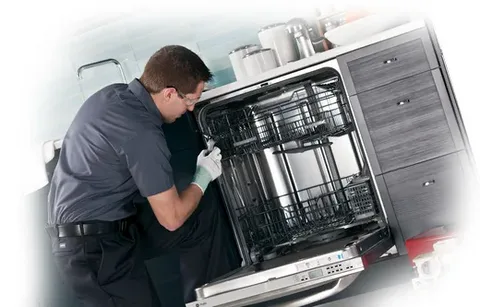
Our Dishwasher Repair in Dubai Services
Whirlpool Dishwasher Repair Dubai
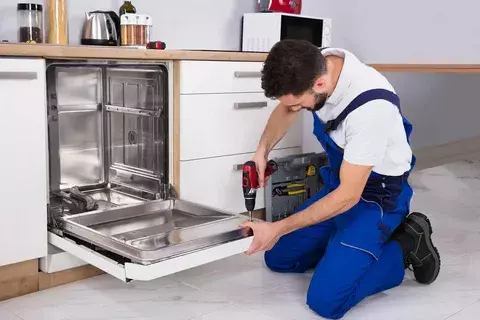
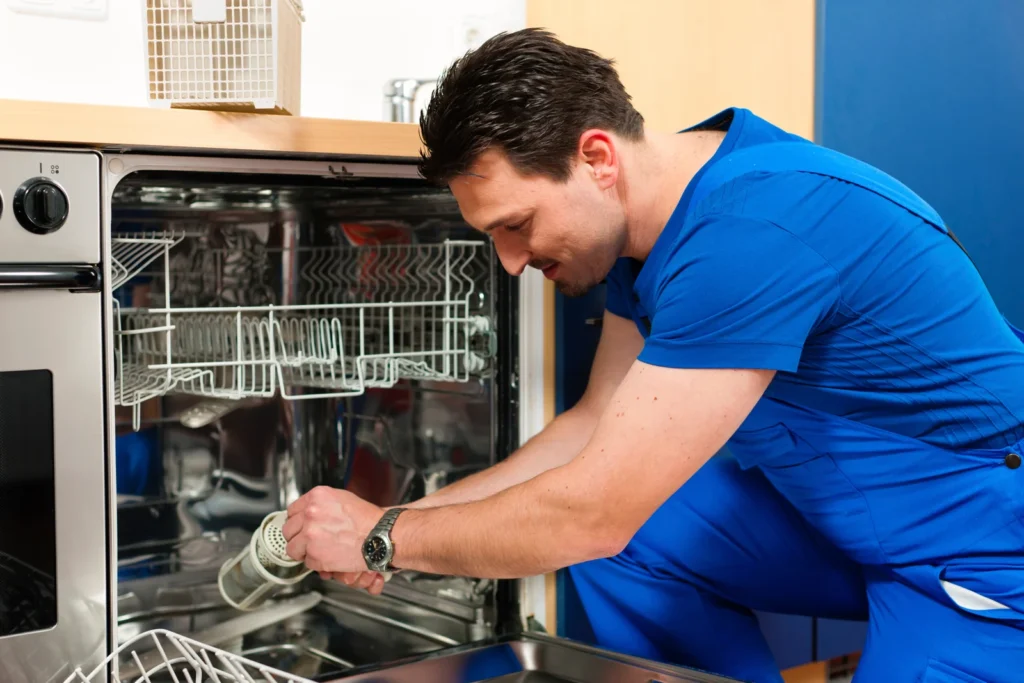
We also assist with selected Miele, Beko, AEG, Ariston, Indesit, Haier, Hoover, Teka, Candy, Smeg, Zanussi and Daewoo models.
We’re an independent repair provider and are not affiliated with or endorsed by these manufacturers unless expressly stated. Brand names and trademarks belong to their respective owners.
⚠️ When Should You Stop Using the Dishwasher?
Switch off the appliance immediately, if it’s safe to do so, if you notice:
Water near the plug or socket · smoke, sparks or a burning smell · repeated circuit-breaker tripping · uncontrolled leakage · an overheating plug or cable · severe grinding from the pump area · damaged wiring · water collecting under a built-in cabinet
Do not pull out a built-in dishwasher while it’s still connected to electricity and water.
Dubai Areas We Serve
Our technicians provide Refrigerator Repair Service in Dubai services throughout:
- Dubai Marina
- Downtown Dubai
- Business Bay
- Palm Jumeirah
- Dubai Hills
- Arabian Ranche
- JLT Motor City
- Jumeirah
- Dubai Hills Estate
- Al Barsha
- Sports City
- Mardiff
- JVC
- Silicon Oasis
Frequently Asked Questions
Drainage problems are commonly caused by blocked filters, restricted hoses, drain pump faults, or waste connection issues.
Cleaning issues may involve spray arms, water circulation, heating systems, detergent delivery, or water pressure.
Regular inspection and cleaning help maintain performance and reduce unexpected breakdowns.
A blocked filter, clogged hose, restricted sink connection, or failed drain pump may prevent drainage — see Not Draining above for the full breakdown.
Many drainage, filling, heating, latch, hose and control faults can be repaired onsite. Parts availability or complex built-in access may require another visit.
No. An error code identifies the system that detected a problem. Testing is still required to determine whether the cause is a blockage, hose, pump, sensor, wiring or control component.
A damaged gasket, loose hose, cracked spray arm, excess foam, failed valve, worn pump seal, or uneven installation — see Leaking above.
Book Appliance Repair in Dubai
Tell us what appliance has stopped working, what symptoms you’ve noticed, and where you’re located — we’ll help you arrange an inspection and figure out the right next step.
Keep the model number, error code and preferred appointment time ready when you contact us.